
Sober and Social: Fun Tips for Navigating Life's Events without Alcohol
Discover practical and enjoyable tips to stay sober in various social settings, from dining out to work functions. Explore drink substitutes and engaging activities that will keep you uplifted and connected in every part of your life. Embrace sobriety while still having a blast!
DM me to have a 20 min strategy conversation about how you can take the first tiny step in reducing your drinking.
#HospitalityLeaders#HospitalityIndustry#HospitalityManagement#HotelLeadership#RestaurantLeadership#GuestExperience#ServiceExcellence#TeamManagement#RevenueManagement#HospitalityInnovation#foodandbeverage#restaurant#MentalFitness#MentalHealthAwareness#MentalWellness#MentalStrength#MindBodyConnection#SelfCare#PositiveMentalAttitude#MentalResilience#EmotionalIntelligence#MindfulnessPractice
When the decision to quit drinking took hold, I had a clear understanding of my reasons. I longed for improved health, a longer life, and freedom from the constant morning misery. However, what caught me off guard was the "how" and "when" of it all. I hadn't fully considered the need to devise a plan for embracing sobriety in every facet of my life. The realization hit me that I had to find a way to navigate the journey and get comfortable with a sober existence, encompassing all aspects of my daily experiences.
Navigating social situations where alcohol is often present can pose challenges. In this blog, we'll explore fun and practical tips to help you stay sober in various areas of your life, from dining out to work functions. We'll also discuss delightful drink substitutes to keep your hands occupied and your spirit uplifted.
Going Out to Dinner or Happy Hour
This was a significant change for both Tyler and I, as we used to thoroughly enjoy pairing wine with our dinners.
However, I must say, the non-alcoholic beverage industry has been experiencing a remarkable surge, and restaurants are gradually catching on.
The market now offers an abundance of tantalizing canned mocktails, non-alcoholic wines, and an impressive variety of delicious non-alcoholic beers.
Pro Tip: To ensure we have suitable options when dining out, we often peruse menus in advance or make a quick call to inquire about their non-alcoholic selections. Surprisingly, we've even approached some of our restaurant acquaintances and kindly asked if they could stock a six-pack of non-alcoholic beer or a bottle of non-alcoholic wine for us, and they've been more than happy to oblige.
Golf
Golfing is Tyler's ultimate passion!
When he hits the course three to four times a week, he loves having a refreshing drink alongside his water.
Luckily, many golf courses now offer non-alcoholic options.
It's a good idea to call ahead and inquire about their selection before your golf outing.
Pro Tip: Non-alcoholic beers at golf courses can be a bit pricey, usually around $7 to $8 per can. If you're feeling a bit rebellious, you could consider buying one from the beverage cart and discreetly stashing a couple more in your golf bag-but you did not hear that from me!
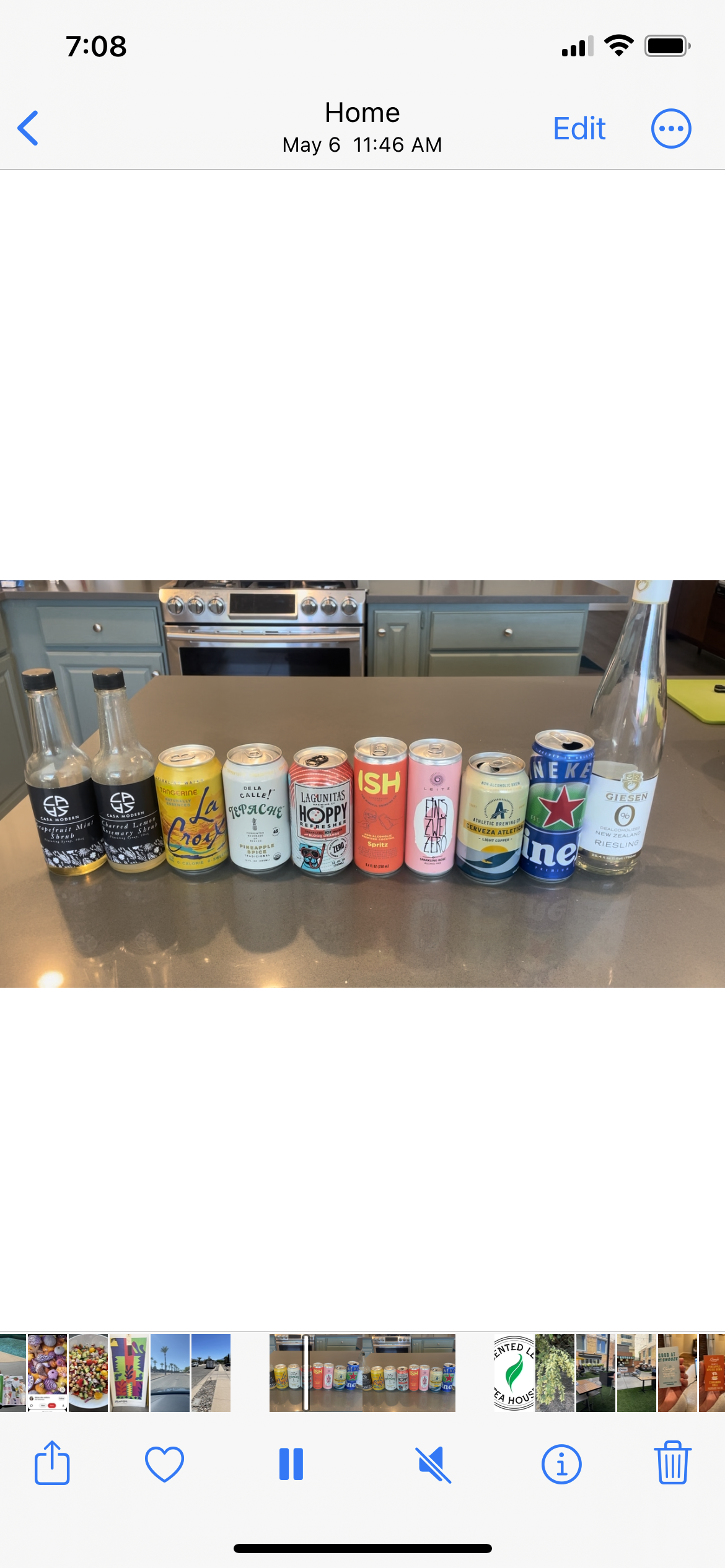
Poolside or Beach Time
For those familiar with us, it's no secret that our vacations always revolve around water.
In the past, this meant indulging in buckets of beer on the beach and enjoying copious amounts of tequila.
However, times have changed.
Nowadays, our fridge is stocked with a selection of Heineken Zero, Lagunitas Hoppy Refreshers, and non-alcoholic bitters that I conveniently order from Amazon.
These delightful companions perfectly complement my La Croix.
Pro Tip: Enhance the flavor and elevate your experience by adding a slice of fruit or a few herbs to your drinks. It adds a refreshing twist that will make your non-alcoholic beverages even more enjoyable. If you are at a resort or on vacation, an N/A beer and frozen virgin margarita make a delicious mock tail.
Celebrating with Friends
In the beginning, I felt a mix of nerves and apprehension when it came to revealing my decision to stop drinking.
I was unsure of how people would respond or how to address the inevitable question of "why."
To ease our concerns, Tyler and I took the time to practice and refine our message, which made a world of difference.
It's important to remember that true friends are there for a reason—they care about you and genuinely want to support you.
If someone is unwilling to stand by you on your sober journey, perhaps it's worth considering the nature of that friendship.
Surrounding yourself with a supportive circle can make a world of difference in your path to sobriety.
Pro Tip: Stop by the liquor store or grocery store before you go to a party and bring what you want to drink. If you are uncomfortable telling people you are not drinking, put your drink in a koozie. No one can tell the difference. Do whatever YOU need todo to feel comfortable and have fun with those you love.
Work Functions
Navigating work-related events can be challenging, but it's absolutely possible to have a great time while staying sober.
The key lies in approaching these occasions with a positive mindset and a determination to make meaningful connections.
Engage in conversations with your colleagues, taking the opportunity to forge deeper professional relationships and learn about their interests and aspirations.
Pro Tip: If you find that the presence of alcohol is overwhelming, consider speaking to the event organizers beforehand to ensure there are non-alcoholic beverage options available. By focusing on building connections, embracing your decision, and seeking out enjoyable alternatives, you can navigate work functions with ease and find fulfillment in both your professional and sober journey.
In conclusion, embarking on a sober lifestyle doesn't mean sacrificing fun or missing out on social experiences.
On the contrary, it opens up a whole world of delightful and refreshing non-alcoholic beverages waiting to be explored.
From mock tails and N/A wines to a variety of flavorful N/A beers, the market is brimming with options to suit any occasion.
Embrace your curiosity and embark on a journey of discovering new and exciting drink substitutes.
Whether you're going out to dinner, enjoying a round of golf, relaxing by the pool or beach, celebrating with friends, or attending work functions, these drink alternatives will keep your hands occupied while letting you savor each moment with clarity and joy.
So go forth, have fun, and relish in the exploration of the wonderful world of N/A beverages.
Cheers to not feeling like shit when you wake up ever again!
Christin

Elevating Restaurant Experiences: Unveiling the Difference in Customer Service and Hospitality
Discover the dissimilarity between customer service and hospitality in the restaurant industry. Learn valuable tips to train your staff, deliver exceptional service, and create memorable dining experiences for your guests.
DM me to have a 20 min strategy conversation about how you can improve the level of hospitality In your restaurant.
#HospitalityLeaders#HospitalityIndustry#HospitalityManagement#HotelLeadership#RestaurantLeadership#GuestExperience#ServiceExcellence#TeamManagement#RevenueManagement#HospitalityInnovation#foodandbeverage#restaurant#MentalFitness#MentalHealthAwareness#MentalWellness#MentalStrength#MindBodyConnection#SelfCare#PositiveMentalAttitude#MentalResilience#EmotionalIntelligence#MindfulnessPractice
My dear friend and longtime co-worker, Andrew, used to lead every interview with the question, "What is the difference between customer service and hospitality?"
You could always tell right away if someone knew the answer.
If they did, it flowed out of them seamlessly, but if they didn't, they would either try to bullshit their way through it or provide a generic answer.
Just like hospitality, the candidates who truly knew how to make an emotional impact on a guest could demonstrate that in their answer and usually got the job.
When it comes to the restaurant industry, customer service and hospitality are two key elements that can make or break a dining experience.
While these terms are often used interchangeably, they encompass distinct aspects that contribute to creating a memorable visit for guests.
In this blog, we will explore the difference between customer service and hospitality, and provide valuable tips on how to train your staff to deliver exceptional service.
Understanding Customer Service vs. Hospitality:
Customer Service:
Customer service refers to the interactions and assistance provided by staff members to meet the needs and expectations of guests.
It primarily focuses on the efficiency, promptness, and accuracy of service delivery.
Examples of customer service in a restaurant setting include taking orders, addressing concerns, and ensuring timely delivery of food and beverages.
Customer service is essential for creating a satisfactory experience, but it alone may not leave a lasting impression on guests.
Hospitality:
Hospitality, on the other hand, goes beyond basic service to create a warm, welcoming, and memorable experience for guests.
It involves creating a positive emotional connection and making guests feel valued and cared for throughout their visit.
Hospitality is about anticipating and exceeding guest expectations, fostering a comfortable ambiance, and personalizing interactions to cater to individual needs.
It includes aspects such as attentiveness, empathy, friendliness, and attention to detail.
Hospitality can transform an ordinary dining experience into an extraordinary one, leaving a lasting impression on guests.
Tips for Training Staff on Customer Service and Hospitality:
Develop a Service-Oriented Culture: Foster a culture that emphasizes the importance of customer service and hospitality. Communicate the values, mission, and vision of your restaurant to the staff, emphasizing the significance of creating exceptional experiences for guests.
Hiring and Selection: During the hiring process, prioritize candidates who possess strong interpersonal skills, empathy, and a genuine passion for providing outstanding service. Look for individuals who naturally embody hospitality and can contribute to a positive team dynamic. Ask them if they know the difference between customer service and hospitality.
Comprehensive Training Programs: Implement comprehensive training programs that cover both technical skills and the nuances of customer service and hospitality. Provide ongoing training to ensure staff members are knowledgeable about the ingredients, preparation, vendors and have tasted every new menu item. The more knowledge your team has about their steps of service, company story and food and beverage menu offerings, opens a door to giving them more time and energy to spend connecting with your guests.
Role-Playing and Simulations: Conduct role-playing exercises and simulations to help staff practice various scenarios they might encounter while serving guests. This helps them develop the ability to think on their feet, handle challenging situations, and deliver personalized service.
Active Listening and Empathy: Train your staff to actively listen to guests and show genuine empathy towards their needs and concerns. Encourage them to go beyond the surface level and anticipate guests' preferences, creating a more personalized and memorable experience.
Attention to Detail: Emphasize the importance of paying attention to the smallest details. From the presentation of the table setting to remembering guests' preferences, these little touches can make a significant impact on the overall experience.
Building Rapport: Teach your staff the art of building rapport with guests. Encourage them to engage in friendly conversations, ask open-ended questions, and show a genuine interest in the guests' experience. Building a connection helps create a more relaxed and enjoyable atmosphere.
Empowerment and Problem-Solving: Empower your staff to resolve issues promptly and effectively. Provide them with the necessary tools, resources, and authority to address guest concerns. Encourage a proactive attitude towards problem-solving.
Feedback and Evaluation: Regularly provide feedback and evaluate staff performance. Recognize and reward exceptional service, and address areas that need improvement. Encourage a culture of continuous learning and development.
In the competitive landscape of the restaurant industry, providing exceptional customer service and hospitality is crucial for success. By understanding the difference between the two and training your staff.
P.S. Find your amazing employees who demonstrate the art of providing hospitality to every guest and make them your trainers.
Christin

What do Sports and Hospitality have in Common?
Learn about the commonalities between sports teams and hospitality teams and how you can apply that knowledge to benefit your own team. Get tips on building a cohesive and supportive atmosphere in your restaurant to enhance your guest experience.
Feel free to leave me any comments on this post or message me with any topics you’d like to learn more about.
#HospitalityLeaders#HospitalityIndustry#HospitalityManagement#HotelLeadership#RestaurantLeadership#GuestExperience#ServiceExcellence#TeamManagement#RevenueManagement#HospitalityInnovation#foodandbeverage#restaurant#MentalFitness#MentalHealthAwareness#MentalWellness#MentalStrength#MindBodyConnection#SelfCare#PositiveMentalAttitude#MentalResilience#EmotionalIntelligence#MindfulnessPractice
I had a blast meeting Jeremy Wolf this week, Co-Founder of Mindready—a team that coaches athletes on sports psychology.
We related the “athletes” of the restaurant industry to those in sports and found striking similarities.
Although I don't see myself as a sports person, there's no doubt that I'm a true athlete in the hospitality industry.
As an industry athlete, I’ve clocked hours of study, “played” endless shifts, orchestrated “plays” alongside countless teammates, and faced both victories and losses.
I used to dislike it when managers used sports analogies to describe our industry, but the two are surprisingly seamless.
Running a successful restaurant is like coaching a winning team in a high-stakes game.
Just as a coach carefully selects and trains their players, a restaurant manager must hire and train a skilled staff. Each member of the team has a specific role to play, just like the players on a sports team.
The restaurant itself is the playing field, and just as a coach must ensure their team is well-prepared, a manager must ensure that the restaurant is clean, organized, and fully stocked with supplies.
Just like a team needs a game plan, a restaurant needs well-defined procedures and protocols to ensure smooth operations.
During service, the restaurant becomes the arena where the action takes place.
Just as a team needs to communicate and work together effectively to win, the restaurant staff must collaborate seamlessly to provide excellent customer service and deliver high-quality food.
The best managers act as the coach on the sidelines, observing the team's performance and making adjustments when necessary.
In the fast-paced environment of a restaurant, unexpected challenges can arise, just like in a game where the opposition tries to throw the team off balance.
A great manager must be adaptable and make quick decisions to keep the restaurant running smoothly. They must also motivate their team, just as a coach encourages their players to give their best performance.
Ultimately, just as a coach's success is measured by the team's performance, a restaurant manager's success is determined by the restaurant's overall performance, customer satisfaction, and financial results.

Here are some tips on how you can lead your team to victory every shift:
Clear Communication
Effective communication is key to fostering a cohesive environment. In sports, coaches emphasize open lines of communication between team members to ensure everyone is on the same page. Similarly, in a restaurant, encourage regular communication among staff members and promote an open-door policy where employees feel comfortable sharing ideas, concerns, and feedback.
Teamwork and Collaboration
In sports, teamwork is crucial for success. Similarly, in a restaurant, encourage a collaborative work environment where employees support and help one another. Foster a sense of camaraderie by organizing team-building activities and emphasizing the importance of working together towards common goals.
Shared Goals and Vision
In sports, teams rally around a shared goal or vision, such as winning a championship. Similarly, in the restaurant business, establish a clear vision for the establishment and communicate it to the staff. Ensure that everyone understands the objectives and is aligned with the mission of providing exceptional service and a memorable dining experience.
Mutual Respect and Recognition
In sports, respect for teammates and opponents is essential. Similarly, in a restaurant, promote a culture of mutual respect among the staff. Encourage employees to recognize and appreciate each other's contributions, and regularly acknowledge and celebrate individual and team achievements.
Continuous Training and Development
In sports, athletes undergo constant training and development to improve their skills. Likewise, in the restaurant industry, invest in training programs to enhance the skills of your employees. Provide opportunities for growth and development, such as cross-training in different roles or providing access to industry-related workshops and courses.
Positive Leadership
In sports, coaches serve as role models and provide positive leadership to motivate and inspire their teams. As a restaurant manager, lead by example and maintain a positive attitude. Provide constructive feedback and support to your staff, and be approachable and available to address any concerns or challenges they may have.
Celebrate Diversity and Inclusion
In sports, teams thrive when they embrace diversity and inclusion, recognizing the strengths that each individual brings. In the restaurant business, create an inclusive environment that appreciates and celebrates the diverse backgrounds, perspectives, and talents of your staff. Foster a culture of equality and fairness, where everyone feels valued and included.
By applying these principles from the world of sports to the restaurant business, you can lead your team to victory and build a cohesive, supportive atmosphere that promotes teamwork, excellence, and a positive work environment that will lead to delivering an exceptional dining experience for your guests.
Shoutout to the Denver Nuggets for entertaining us with their thrilling sweep of the LA Lakers!
Be Well,
Christin

The Importance of Rest and Recovery in the Restaurant Business
Are you feeling overwhelmed in the restaurant industry? Discover why taking restorative recovery days is essential for both your physical and mental wellbeing.
Feel free to leave me any comments on this post or message me with any topics you’d like to learn more about.
#HospitalityLeaders#HospitalityIndustry#HospitalityManagement#HotelLeadership#RestaurantLeadership#GuestExperience#ServiceExcellence#TeamManagement#RevenueManagement#HospitalityInnovation#foodandbeverage#restaurant#MentalFitness#MentalHealthAwareness#MentalWellness#MentalStrength#MindBodyConnection#SelfCare#PositiveMentalAttitude#MentalResilience#EmotionalIntelligence#MindfulnessPractice
Working in the restaurant business can be an exhilarating and fast-paced experience. The constant movement, bustling environment, and demanding tasks often make it easy to lose track of the toll it takes on our bodies and minds.
In this blog, we will delve into the significance of taking a recovery day for both our mental and physical health, focusing on the benefits of restorative yoga as a means of rejuvenation.
Counting Steps: The Unseen Toll
One of the subtle yet significant aspects of working in a restaurant is the sheer number of steps we take in a single day.
Whether we're waitstaff, chefs, or managers, our occupation demands constant movement.
Every day, our steps accumulate, often reaching astonishing numbers. While it may seem like a trivial aspect, the impact on our bodies should not be overlooked.
Physical Well-being: The Need for Rest
The nature of the restaurant business is physically demanding.
Long hours spent on our feet, carrying trays, lifting heavy pots and pans, and navigating cramped spaces take a toll on our muscles and joints.
The repetitive motion of certain tasks can lead to strain and injuries, especially when we neglect to prioritize rest.
Taking a recovery day is essential to allow our bodies to heal and regenerate.
Rest helps reduce inflammation, prevents chronic pain, and lowers the risk of long-term musculoskeletal issues.
By acknowledging the physical toll our work takes on us and embracing recovery, we can improve our overall physical well-being and prolong our careers in the restaurant industry.

Mental Health: Recharge for Resilience
The restaurant business is known for its high-stress environment.
Dealing with demanding customers, time pressure, and the need to multitask can lead to mental exhaustion and burnout.
While we often push through long hours and stressful situations, neglecting our mental health can have serious consequences.
Taking a recovery day allows us to recharge mentally and emotionally.
It gives us the opportunity to step away from the fast-paced environment and focus on self-care.
Rest and relaxation replenish our energy reserves, improve focus and concentration, and reduce the risk of anxiety and depression.
By acknowledging the importance of mental recovery, we can enhance our overall well-being and perform better in our professional lives.
The Restorative Power of Yoga
When it comes to recovery, restorative yoga is a powerful tool.
It offers a gentle and nurturing practice that allows us to relax and restore our bodies and minds.
Unlike more intense forms of yoga, restorative yoga focuses on passive stretching, deep breathing, and mindfulness.
Restorative yoga promotes deep relaxation, releases tension, and calms the nervous system.
By practicing this form of yoga, we can reduce muscle soreness, improve flexibility, and enhance our sleep quality.
Additionally, the meditative aspects of restorative yoga help us cultivate mindfulness and promote a sense of inner peace and balance.
In the demanding world of the restaurant business, it's crucial to prioritize rest and recovery for our overall well-being.
Taking a recovery day is not a sign of weakness but a proactive approach to maintaining our physical and mental health.
Be Well,
Christin